
 Highstreetpharma.net is the ONLY Official Website. Best Price Guaranteed. Don’t trust communications from..
 Bookmark






REVIEWS ON GOOGLE, REDDIT, TECHMOREREVIEW.COM: EXCELLENT



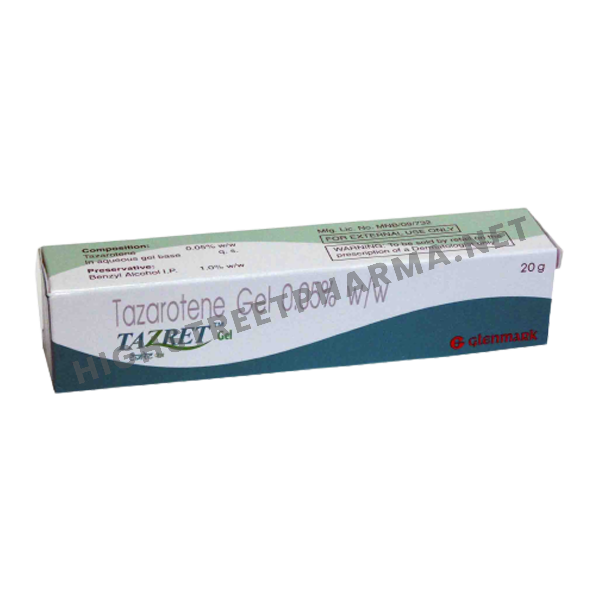
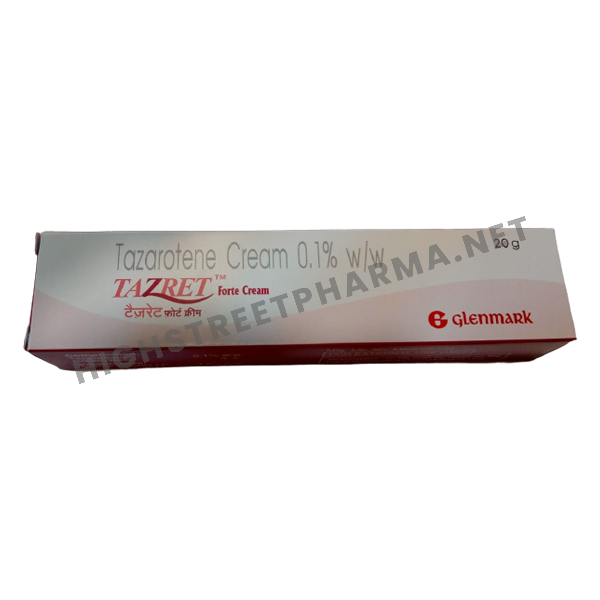
Tazret Gel 0.5% 20gm
Price range: $13.30 through $71.25
Tazret Gel is a medication used to treat psoriasis and acne. It acts by preventing skin cell proliferation and thickening. Apply it just to the afflicted regions and not to the healthy skin.
REVIEWS ON GOOGLE, REDDIT, TECHMOREREVIEW.COM: EXCELLENT

Introduction
Maintaining healthy skin can become challenging when dealing with persistent scaling, rough patches, uneven texture, and conditions involving excessive skin cell production. Such concerns may require specialised topical formulations that work by influencing the natural biological processes of the skin. Retinoids are an important category of dermatological ingredients because of their ability to regulate skin cell growth and differentiation.
Tazret Gel 0.05% 20gm is a topical formulation containing tazarotene, a synthetic retinoid related to vitamin A. It works by interacting with specific receptors in skin cells and influencing the way cells develop and mature. This activity makes tazarotene particularly relevant to the management of plaque psoriasis, a condition associated with excessive skin cell accumulation.
The gel formulation provides a lightweight application format for targeted skin care. Understanding its composition, properties, working mechanism, potential benefits, and precautions helps explain the role of this product in dermatological care.
What Is Tazret Gel 0.05% 20gm?
Tazret Gel 0.05% 20gm is a topical formulation containing 0.05% tazarotene as its active ingredient. Tazarotene belongs to the third-generation retinoid group and is recognised for its ability to influence skin cell differentiation and proliferation.
The 0.05% concentration means that each gram of gel contains approximately 0.5 mg of tazarotene. Its topical format allows the ingredient to be applied directly to the intended skin area.
Unlike ordinary moisturising products, this gel works through cellular processes within the skin. Its primary purpose is not simply to hydrate the surface but to influence abnormal patterns of skin cell development.
The 20gm packaging offers a convenient quantity for targeted application. The gel format also provides a different texture and application experience compared with traditional cream-based formulations.
Active Ingredient: Tazarotene
Tazarotene is the main active ingredient in Tazret Gel. It is a synthetic retinoid that influences the activity of skin cells through interactions with retinoic acid receptors.
After application, tazarotene is converted into tazarotenic acid, its active metabolite. This substance interacts with specific receptors inside skin cells and influences the expression of genes involved in cellular development.
Its important properties include:
- Regulating skin cell differentiation.
- Influencing abnormal skin cell proliferation.
- Helping reduce excessive skin cell accumulation.
- Supporting the management of plaque psoriasis.
- Influencing certain inflammatory processes in the skin.
These properties distinguish tazarotene from ordinary cosmetic ingredients that primarily provide surface hydration or temporary improvements in skin appearance.
What Is Tazret Gel 0.05% Used For?
1. Management of Plaque Psoriasis
Plaque psoriasis is a chronic skin condition characterised by raised, thickened patches that may have a silvery or whitish appearance. These patches commonly develop on areas such as the elbows, knees, scalp, and lower back.
The condition involves an accelerated skin cell production cycle. As new cells develop too quickly, older cells accumulate on the surface, resulting in visible scaling and thickened patches.
Tazarotene helps regulate skin cell growth and differentiation. Its activity can reduce the excessive accumulation of skin cells associated with plaque psoriasis.
The 0.05% gel strength is an established concentration used in topical formulations for plaque psoriasis. Clinical product information identifies this concentration for psoriasis affecting limited areas of the body.
2. Regulation of Skin Cell Turnover
Skin cell turnover is a natural biological process in which older cells are replaced by newer ones. This process helps maintain the skin’s structure and surface.
Certain skin conditions involve irregularities in cell production and maturation. Tazarotene influences these processes by interacting with retinoic acid receptors.
This activity makes it useful in dermatological treatments where abnormal skin cell development contributes to visible skin changes.
3. Supporting Skin Surface Improvement
Excessive skin cell accumulation can contribute to roughness, scaling, and an uneven skin surface. By influencing cellular differentiation, tazarotene helps address some of the biological processes responsible for these changes.
However, it is important to understand that Tazret Gel 0.05% is not an ordinary exfoliating or moisturising product. Its main function is associated with the management of specific skin conditions rather than general cosmetic skin enhancement.
How Does Tazret Gel 0.05% Work?
The working mechanism of Tazret Gel is based on the biological activity of tazarotene.
After topical application, the active ingredient is converted into tazarotenic acid. This metabolite interacts with retinoic acid receptors, particularly RAR-beta and RAR-gamma, which are involved in regulating cellular activity.
Its mechanism can be understood through three important processes.
Regulation of cell differentiation: Tazarotene influences the way immature skin cells develop into mature cells. This helps regulate abnormal patterns of skin cell maturation.
Control of excessive cell growth: In plaque psoriasis, skin cells multiply more rapidly than normal. Tazarotene influences this activity and helps reduce abnormal cellular accumulation.
Influence on inflammatory activity: Tazarotene also affects certain biological processes associated with inflammation, which contributes to its dermatological properties.
These activities work at the cellular level, meaning visible changes generally develop gradually rather than immediately after application
Understanding the Gel Formulation
The gel format is one of the distinguishing characteristics of this product. Topical gels are generally developed to provide a lighter consistency than many traditional creams.
Some general characteristics of gel-based formulations include:
- Lightweight texture.
- Convenient spreading over targeted skin areas.
- Less heavy sensation compared with many richer creams.
- Suitable consistency for topical application.
- Direct delivery of active ingredients to the application area.
The actual texture, absorption, and finish depend on the complete formulation and its inactive ingredients.
Although gels may feel lighter, this does not mean they cannot cause dryness or irritation. The active ingredient and individual skin sensitivity remain important factors.
How to Apply Tazret Gel
Correct application helps minimise unnecessary skin irritation and supports appropriate use of the formulation.
The following general application considerations are useful:
- Clean the intended skin area using a gentle cleanser.
- Allow the skin to dry completely before application.
- Apply a thin layer to the affected area according to the product instructions.
- Avoid unnecessary contact with the eyes, lips, and other sensitive areas.
- Wash your hands after application.
- Maintain a gentle skincare routine to avoid additional irritation.
- Protect the skin from excessive sunlight during the day.
Tazarotene gel is generally used in the evening. The appropriate amount and frequency depend on the product instructions and individual skin requirements.
Applying more gel than necessary does not improve its effectiveness and may increase the likelihood of irritation.
Possible Skin Reactions
Tazarotene is an active retinoid, so some local skin reactions may occur during its use.
Commonly reported reactions include:
- Skin dryness and tightness.
- Redness around the application area.
- Peeling or flaking.
- Burning or stinging sensations.
- Itching and irritation.
- Increased sensitivity to sunlight.
These reactions may differ in intensity depending on skin sensitivity and the condition being managed.
Excessive irritation should not be considered a sign of better results. Persistent discomfort, severe redness, or swelling should receive appropriate attention.
Important Precautions and Storage
Understanding the precautions associated with topical tazarotene is important for maintaining skin comfort.
Sun protection: Tazarotene may increase sensitivity to sunlight. Using broad-spectrum sunscreen, wearing protective clothing, and avoiding excessive sun exposure can help protect the skin.
Sensitive areas: Avoid applying the gel around the eyes, mouth, and other sensitive areas.
Damaged skin: Application to cracked, severely irritated, or damaged skin may increase discomfort.
Other skincare products: Combining strong exfoliants, abrasive cleansers, or multiple irritating ingredients may increase dryness and skin sensitivity.
Pregnancy: Tazarotene should not be used during pregnancy because of potential risks to the developing foetus.
Storage: Keep the gel in its original packaging and follow the storage conditions printed on the container. Protect it from excessive heat and direct sunlight, and keep it out of children’s reach.
How Long Does It Take to Notice Results?
The time required to observe improvements varies depending on the skin condition, its severity, and individual response.
In plaque psoriasis, changes generally develop gradually as the ingredient influences abnormal skin cell activity. Some people may notice changes in scaling and the appearance of affected patches over several weeks.
Temporary dryness and peeling can occur during the initial stages. These reactions do not necessarily indicate that the product is producing better results.
Consistency, appropriate application, and protection against excessive sunlight are important considerations throughout the skin-care process.
Frequently Asked Questions
- What is the active ingredient in Tazret Gel 0.05%?
The active ingredient is tazarotene, a synthetic retinoid related to vitamin A. Each gram of a 0.05% formulation contains approximately 0.5 mg of tazarotene.
- What is Tazret Gel 0.05% primarily used for?
The 0.05% tazarotene gel concentration is an established topical formulation for managing plaque psoriasis.
- Does Tazret Gel cause skin peeling?
Yes. Peeling, dryness, redness, and mild burning or stinging are possible local reactions associated with topical tazarotene.
- Is the gel formulation lightweight?
Gel formulations generally have a lighter consistency than many traditional creams. However, the exact texture depends on the formulation’s inactive ingredients.
- Can Tazret Gel be used during the daytime?
Tazarotene is generally applied in the evening. Sun protection is important because the ingredient can increase skin sensitivity to sunlight.
Conclusion
Tazret Gel 0.05% 20gm is a topical formulation containing tazarotene, an active retinoid that influences skin cell growth and differentiation. Its recognised dermatological application includes the management of plaque psoriasis, where excessive skin cell production contributes to thickened patches and scaling.
The ingredient works through specific cellular receptors, helping regulate abnormal skin development. Its gel formulation provides a lightweight format for targeted application, while the 0.05% concentration offers an established strength for topical psoriasis treatment.
Although tazarotene has useful dermatological properties, possible reactions such as dryness, peeling, redness, and increased sunlight sensitivity should be considered. Understanding the formulation, its working mechanism, and relevant precautions helps provide a clearer picture of its role in skin care.
Overall, Tazret Gel 0.05% represents a targeted topical approach to managing particular skin concerns through the regulation of skin cell activity.
Content Source: View Source PDF
Additional information
| Tube | 1 Tube/s, 3 Tube/s, 6 Tube/s |
|---|




davispadro –
Great Customer Service & Quality product