
 Highstreetpharma.net is the ONLY Official Website. Best Price Guaranteed. Don’t trust communications from..
 Bookmark





REVIEWS ON GOOGLE, REDDIT, TECHMOREREVIEW.COM: EXCELLENT



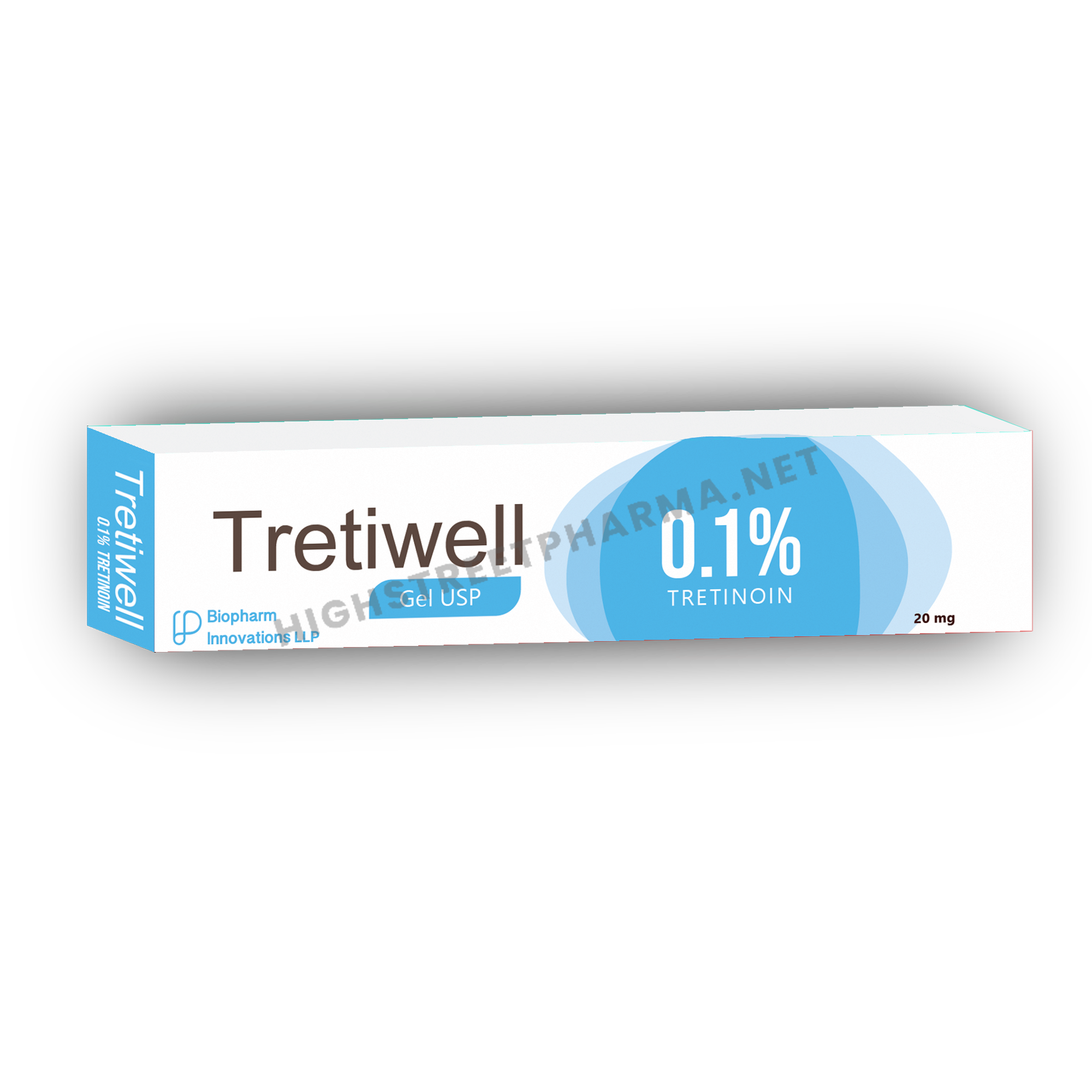
Tretiwell Gel 0.1% (Tretinoin)
Price range: $6.79 through $34.14
Tretiwell Gel 0.1% is a kind of vitamin A used to treat acne, which appears as patches or pimples on your face, chest, or back. It also aids in the smoothing of rough face skin and the reduction of fine wrinkles on the skin.
Manufactured By: Biopharma Innovations LLP
REVIEWS ON GOOGLE, REDDIT, TECHMOREREVIEW.COM: EXCELLENT

Introduction
Tretiwell Gel 0.1% contains tretinoin, a topical retinoid derived from vitamin A. It is primarily used in the management of acne and helps improve the appearance of skin affected by clogged pores, pimples, and uneven texture. Tretinoin is widely studied for its effects on skin cell turnover, making it an important ingredient in dermatological skincare treatments.
The 0.1% concentration is a high-strength formulation that works by influencing how skin cells develop and shed. It helps prevent the accumulation of dead skin cells inside hair follicles, which can contribute to blocked pores and acne formation. With appropriate use, tretinoin may help reduce existing acne lesions and support clearer-looking skin over time.
Understanding how this gel works, how to apply it, and what precautions to follow is important before incorporating it into a skincare routine. Since tretinoin can cause irritation, particularly during the initial weeks, it should be used according to a healthcare professional’s instructions.
What Is Tretiwell Gel 0.1%?
Tretiwell Gel 0.1% is a topical preparation containing 0.1% tretinoin as its active ingredient. Tretinoin belongs to a group of medicines called retinoids, which are related to vitamin A. These medicines influence skin cell growth and help regulate the process through which old skin cells are replaced by new ones.
One of the main purposes of topical tretinoin is acne management. Acne commonly develops when dead skin cells and natural oils accumulate inside hair follicles, creating blockages that can lead to blackheads, whiteheads, and inflammatory pimples.
Tretinoin helps address this process by encouraging normal skin cell shedding and reducing the formation of blocked pores. The gel formulation is designed for application directly to the affected areas of the skin.
Because 0.1% is a relatively strong concentration, it may not be suitable for everyone, especially people who are new to retinoid treatments or have sensitive skin.
How Does Tretinoin 0.1% Work?
Tretinoin works by interacting with specific receptors in skin cells and influencing the way these cells grow and mature. Its effects are particularly important in the hair follicles, where acne-related blockages often develop.
Under normal circumstances, dead skin cells gradually move towards the skin’s surface and are shed. However, when this process becomes irregular, dead cells may accumulate inside pores and mix with sebum, resulting in comedones.
Tretinoin helps normalize this process and supports the removal of accumulated skin cells. This reduces the formation of new clogged pores and helps improve existing acne over time.
Its action can be understood through three main processes:
- Improved cell turnover: Helps regulate the replacement and shedding of skin cells.
- Reduced pore blockage: Helps prevent dead skin cells from accumulating inside hair follicles.
- Improved skin texture: Regular treatment may gradually improve roughness and the appearance of certain acne-related skin irregularities.
Tretinoin does not work immediately. The skin needs time to respond to treatment, and consistent use according to medical instructions is important.
Uses and Potential Benefits
Tretinoin 0.1% is mainly associated with acne treatment. Its benefits depend on the individual’s skin condition, treatment duration, and response to the medication.
- Helps Manage Acne
Tretinoin is commonly prescribed for acne because it helps reduce the formation of comedones. These include blackheads and whiteheads, which develop when pores become blocked. By addressing pore congestion, it can also help reduce the development of certain new acne lesions.
- Supports Clearer-Looking Skin
When pores are less likely to become blocked, the frequency of certain acne breakouts may decrease. Over time, this can contribute to a clearer skin appearance, although results differ between individuals.
- Improves Uneven Skin Texture
The process of regulating skin cell turnover may help improve rough or uneven skin texture. Some people notice smoother-looking skin after several weeks or months of appropriate treatment.
- May Improve the Appearance of Fine Lines
Topical tretinoin is also used in certain dermatological treatments for photoaged skin. Depending on the formulation and clinical indication, it may help improve the appearance of fine wrinkles and sun-related skin changes. However, acne treatment and photoaging treatment are different uses, and the appropriate formulation should be determined by a dermatologist.
- Helps Prevent New Comedones
One important feature of tretinoin is its ability to reduce the formation of microcomedones, which are early microscopic blockages that can develop into visible acne lesions. This makes it useful as part of a longer-term acne management plan.
How to Apply Tretiwell Gel 0.1%
Correct application is important because tretinoin can irritate the skin, especially when used in higher concentrations.
The following general steps explain how topical tretinoin is commonly applied:
- Clean the skin: Wash the affected area with a gentle, non-medicated cleanser to remove dirt, oil, and other impurities.
- Allow the skin to dry: Gently pat the skin with a clean towel. Apply the medication only to completely dry skin, following the product instructions.
- Apply a thin layer: Use a small amount and spread a thin layer over the acne-affected area rather than applying a thick coating to individual pimples.
- Avoid sensitive areas: Keep the gel away from the eyes, lips, corners of the nose, and other mucous membranes.
- Follow the prescribed schedule: Tretinoin is commonly used in the evening. However, the frequency should be determined by a healthcare professional, particularly when using a 0.1% concentration.
- Use a moisturizer: A gentle, non-comedogenic moisturizer can help reduce dryness and support the skin barrier.
Applying a larger quantity does not make tretinoin work faster. Excessive application can increase irritation, redness, and peeling without providing additional benefits.
How Long Does Tretinoin Take to Show Results?
Tretinoin requires patience because its effects develop gradually as the skin adjusts to treatment.
Some people may notice changes in their acne within two to three weeks, while others require six weeks or longer to see noticeable improvement. More sustained results may take several weeks of consistent treatment.
During the initial stage, some users experience temporary redness, dryness, peeling, or an increase in visible acne lesions. This adjustment period does not necessarily mean that the treatment is ineffective.
The time required to see results depends on several factors, including:
- The severity and type of acne.
- Individual skin sensitivity.
- Consistency of application.
- The strength and formulation of the medication.
- Other skincare products used alongside treatment.
If acne becomes significantly worse or irritation continues, a dermatologist should review the treatment rather than increasing the amount applied.
Possible Side Effects
Like other topical retinoids, tretinoin 0.1% can cause side effects. These are often more noticeable during the first few weeks of treatment.
Common reactions include:
- Dryness: The treated skin may feel tight or dehydrated.
- Redness: Some individuals experience temporary redness around the application area.
- Peeling: Dead skin may become more noticeable as the skin adjusts.
- Burning or stinging: A mild burning sensation can occur after application.
- Itching: The treated area may become temporarily itchy or uncomfortable.
- Increased sensitivity: Skin may become more sensitive to sunlight, wind, and cold weather.
Severe swelling, blistering, significant pain, or an intense rash should not be ignored. Stop using the medication and seek medical advice if serious irritation develops.
Important Precautions Before Using Tretinoin
Before starting treatment, it is important to understand the precautions associated with tretinoin.
- Sun Protection
Tretinoin can increase skin sensitivity to sunlight. Prolonged exposure to ultraviolet radiation may worsen irritation. Use broad-spectrum sunscreen with SPF 30 or higher during the day, wear protective clothing, and avoid tanning beds.
- Avoid Harsh Skincare Products
Strong exfoliants, abrasive scrubs, alcohol-based toners, and other irritating skincare products can increase dryness and discomfort. Ask a dermatologist before combining tretinoin with benzoyl peroxide, salicylic acid, or other acne treatments.
- Do Not Apply to Damaged Skin
Avoid applying the gel to sunburned, broken, irritated, or eczematous skin unless specifically instructed by a healthcare professional.
- Pregnancy and Breastfeeding
Topical retinoids are generally avoided during pregnancy as a precaution. Anyone who is pregnant, planning pregnancy, or breastfeeding should discuss the risks and appropriate alternatives with a healthcare professional before using tretinoin.
- Choose the Correct Strength
A 0.1% concentration is relatively strong. People who have never used tretinoin may be more likely to experience irritation. A dermatologist can determine whether this strength is appropriate or whether a lower concentration would be more suitable.
Who Should Consider Using Tretiwell Gel 0.1%?
This medication may be considered for individuals experiencing acne-related concerns, particularly clogged pores, blackheads, and whiteheads. It may also be prescribed for certain cases of inflammatory acne as part of a broader treatment plan.
However, it is not automatically suitable for every skin type or acne condition. People with sensitive skin, eczema, or an already damaged skin barrier should receive professional advice before starting treatment.
Individuals experiencing deep, painful cystic acne or acne that leaves significant scarring may require additional treatments. A dermatologist can assess the condition and recommend an appropriate approach.
Storage and Handling
Proper storage helps maintain the quality of topical medication. Keep the gel in its original packaging and follow the storage instructions provided with the product.
- Store it at the temperature specified on the packaging.
- Keep the container tightly closed when not in use.
- Protect it from excessive heat and direct sunlight.
- Keep it away from children and pets.
- Do not use the product beyond its stated expiry date.
Wash your hands after application unless the hands themselves are the intended treatment area.
Frequently Asked Questions
- Can Tretiwell Gel 0.1% be used every day?
Tretinoin is commonly prescribed for once-daily evening application. However, because 0.1% is a high concentration, the appropriate starting frequency should be decided by a dermatologist based on skin tolerance and individual needs.
- Can tretinoin help with blackheads and whiteheads?
Yes. Tretinoin helps prevent the accumulation of dead skin cells inside pores, making it useful for managing comedonal acne, including blackheads and whiteheads.
- Is peeling normal when starting tretinoin?
Mild peeling, dryness, and redness can occur during the initial weeks. These reactions are associated with skin irritation. Excessive peeling, painful burning, or swelling requires medical attention.
- Can moisturizer be used with tretinoin?
Yes. A gentle, non-comedogenic moisturizer can help manage dryness and maintain skin hydration. It is generally a useful addition to a skincare routine involving topical retinoids.
- Should tretinoin be applied in the morning or evening?
Tretinoin is generally recommended for evening application. During the daytime, sunscreen and other appropriate sun-protection measures are important because treated skin can become more sensitive to sunlight.
Conclusion
Tretiwell Gel 0.1% contains tretinoin, a vitamin A derivative commonly used in dermatological acne treatment. It works by regulating skin cell turnover, helping prevent clogged pores, and improving the appearance of acne-affected skin over time. Its potential benefits include managing blackheads, whiteheads, and certain inflammatory acne lesions while supporting smoother-looking skin.
Although tretinoin can be an effective treatment, its 0.1% concentration requires careful use. Dryness, redness, peeling, and irritation are possible, particularly during the initial treatment period. Following professional guidance, maintaining a gentle skincare routine, and protecting the skin from sunlight are important parts of treatment.
Understanding the active ingredient, application process, expected results, and possible side effects can help individuals make informed decisions about their skincare treatment.
Content Source: View Source PDF
Additional information
| Tube | 1 Tube/s, 3 Tube/s, 6 Tube/s |
|---|


Emily –
I’ve been using Tretiwell Gel 0.05% for about 6 weeks and my skin is noticeably smoother. Breakouts have reduced and my pores look tighter. The gel texture is great for oily skin like mine—it absorbs fast and doesn’t feel greasy.
John Brousseau –
Tretiwell works wonders for acne, but you need to be patient. I had some dryness at first, but pairing it with a good moisturizer helped. Totally worth it!
John Griffin –
Tretiwell Gel has helped clear up my acne significantly. I experienced some mild redness initially, but it subsided after a few days. Overall, very satisfied with the results.
Stephen Ziemba –
The gel works well in reducing breakouts, but I found the scent to be a bit strong. It’s a small trade-off for clearer skin, though
Donald McGowan –
Ordering from HighStreetPharma was seamless. The Tretiwell Gel arrived promptly and was well-packaged. The product itself is top-notch—consistent and effective.
Donald McGowan –
Visible results in just 3 weeks! My skin feels smoother and my acne scars have started to fade. Love how lightweight and easy to apply this gel is.
Charles Grant –
This is the best tretinoin gel I’ve used so far. No irritation, no peeling—just clearer, healthier skin over time. Will definitely reorder.
James Schultz –
Very effective for acne and uneven texture. I started seeing improvement around week 4. Use sunscreen—it really makes a difference!
khaquib702 –
I have been using Tretiwell Gel 0.1% (Tretinoin) from HighStreetPharma and I am completely satisfied with it. I began to observe a more even tone, a visible reduction in acne, and clearer skin after only a few weeks of consistent use. I began gradually, as it is undoubtedly potent; however, the outcomes have been remarkable.
What truly impressed me was the product’s quality and authenticity. HighStreetPharma provided the product as anticipated, with fast shipping and exceptional packaging. I have previously experimented with other sources; however, this is clearly the most dependable.
Marie –
Fast and reliable service. The website is user-friendly, and the checkout process is smooth.